
P r i n t e r s
Types of Printers
Two commonly used types of printers are:
- Laser Printer
- Inkjet Printer
Laser Printer
Structure
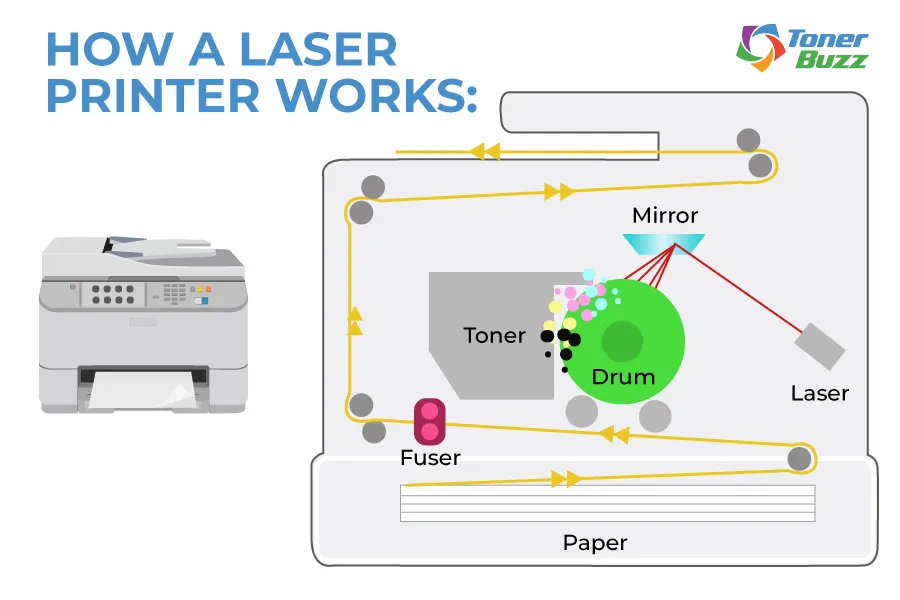
The main components of a laser printer are:
- Photo-conducting drum: A drum that can hold an electrical Charge and interacts with light.
- Toner-coated roller: Applies dry toner to the charged areas of the drum.
- Laser: Projects the image onto the drum.
- Scanning unit: Directs the Laser beam for precise image formation.
Working of a Laser Printer
-
Charging the Drum:
- The photo-conducting drum is positively charged.
-
Image Formation:
- A laser beam is used to create an image on the drum.
- Exposed areas: Lose their positive charge when hit by the laser light.
- Non-exposed areas: Retain their positive charge.
-
Toner Application:
- Positively charged areas attract negatively charged toner particles.
- The toner adheres to the charged areas, forming the image.
-
Transferring the Image:
- The toner is transferred to paper using an electrostatic charge.
- Heat generated by the printer melts the toner, creating a permanent image.
Inkjet Printer
Structure
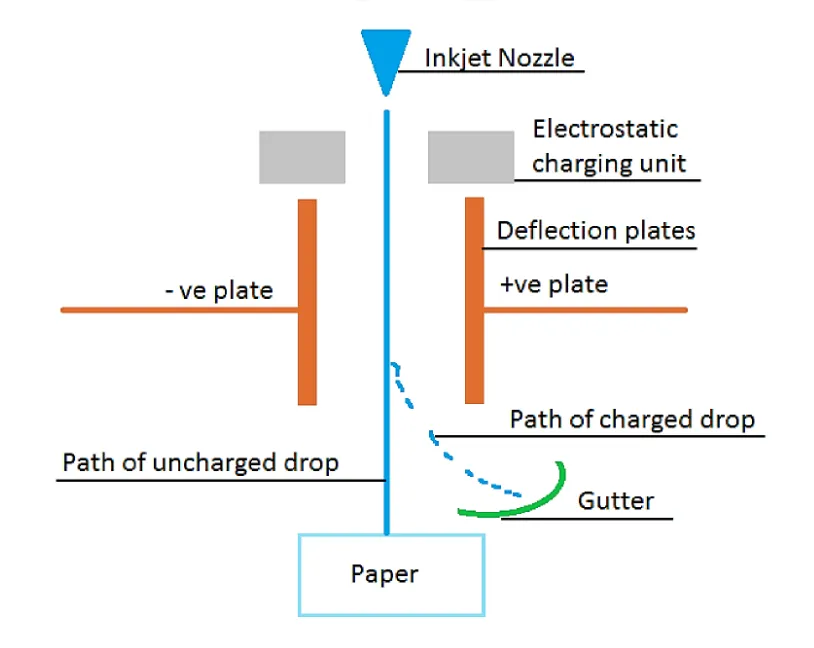
The main components of an inkjet printer are:
- Inkjet nozzle: Dispenses tiny droplets of ink.
- Electrostatic charging unit: Charges the ink droplets for precise control.
- Deflection plates: Two oppositely charged plates that control the trajectory of the ink droplets.
- Gutter: Collects unused ink droplets.
Working of an Inkjet Printer
-
Ink Dispersion:
- Tiny droplets of ink are forced out through a fine nozzle.
-
Charging the Ink:
- The electrostatic charging unit charges the ink droplets.
-
Deflection Control:
- Charged ink droplets pass between two oppositely charged deflection plates.
- For example: A negatively charged ink droplet is attracted to the positive plate, altering its trajectory.
-
Placing Ink on Paper:
- When ink needs to be placed on paper, the charging control turns off the electric field for specific droplets, allowing them to fly straight and hit the paper.
- Uncharged droplets bypass the deflection and directly strike the paper to form the image.
Summary
Key Points
| Aspect | Laser Printer | Inkjet Printer |
|---|---|---|
| Core Technology | Uses a laser to create charged areas on a drum and dry toner for printing. | Uses charged ink droplets and deflection plates to precisely place ink on paper. |
| Image Formation | Light from the laser creates an image by charging and discharging areas on the drum. | Charged droplets are controlled by electric fields to target specific areas on the paper. |
| Final Step | Heat melts the toner to form a permanent image. | Uncharged droplets hit the paper directly, forming the image. |
| Main Components | Drum, toner roller, laser, scanning unit. | Inkjet nozzle, charging unit, deflection plates, gutter. |
Significance
- Laser Printers: Common in offices and workplaces due to their high speed and precision for text-heavy documents.
- Inkjet Printers: Ideal for high-quality color prints, such as photographs and detailed illustrations, at an affordable cost.